
“I didn’t know I double-booked.” Most facilities have heard that at least once. A parent shows up. Two teams are scheduled in the same space.

Some weeks your schedule fills up quickly.
Other weeks, it feels slower than expected.
Inconsistent booking weeks are common for sports facilities, even when demand hasn’t changed significantly. In most cases, the issue isn’t a lack of interest. It’s how scheduling, communication, and booking processes are set up.
Understanding what causes these fluctuations helps facility owners create a more consistent and predictable schedule.
In this article, we’ll break down the most common reasons booking weeks vary and what they typically indicate about your current setup.

When clients aren’t confident in your schedule, they hesitate to book.
This usually happens when:
From the client’s perspective, this creates uncertainty. If they’re not sure what’s available—or if they think something might change—they are more likely to wait.
Over time, that hesitation shows up as inconsistent booking weeks.
You can often spot this issue when:
A clear, stable schedule reduces hesitation and makes booking feel more predictable.
Your schedule may look full at the start of the week, but actual attendance can vary.
Last-minute cancellations and no-shows create gaps that are difficult to recover from.
This often includes:
The result is inconsistency between what’s booked and what actually happens.
Facilities that don’t track these patterns may assume demand is fluctuating, when in reality it’s a reliability issue.
You can identify this when:
Reducing these gaps helps stabilize your weekly schedule.
Even when clients intend to book, friction in the process can stop them.
This typically happens when booking requires:
Each additional step creates a drop-off point.
For example:
These small delays add up and show up as inconsistent booking patterns.
You can spot this when:
Simplifying booking reduces hesitation and increases follow-through.
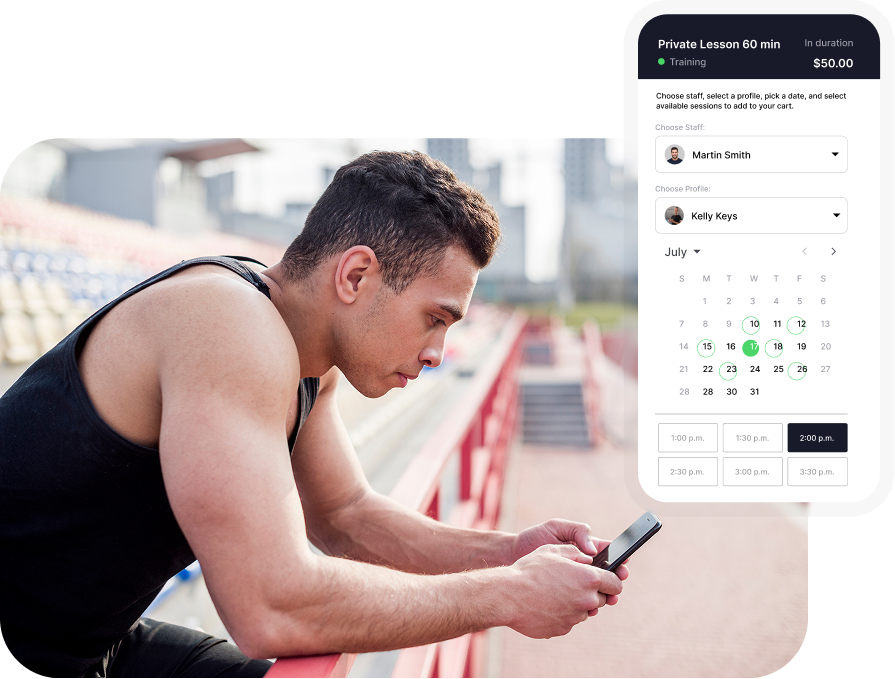
Not all time slots have the same level of demand.
In many facilities:
When schedules are fixed without adjusting to these patterns, it creates uneven booking weeks.
For example:
This is not a demand problem. It’s a distribution problem.
You can identify this when:
Adjusting your schedule to match demand helps create more consistent booking patterns.
Clients don’t always book immediately after showing interest.
Without consistent communication, that interest fades.
This often happens when:
Even small gaps can reduce follow-through.
For example:
You can spot this when:
Consistent communication helps maintain booking momentum.
Not all inconsistency comes from your operations.
Clients often have changing schedules based on:
These factors can create natural fluctuations in booking behavior.
Facilities that don’t account for this often see:
While you can’t control client schedules, understanding these patterns helps you set more realistic expectations.
Without clear visibility into your data, it’s difficult to understand why bookings fluctuate.
When systems are disconnected, you may not be able to see:
This leads to reactive decisions instead of proactive ones.
You can identify this when:
Better visibility allows you to identify patterns early and adjust before inconsistencies grow.
Consistency improves when scheduling, booking, and communication are connected.
With Upper Hand, you can manage availability, bookings, and client communication in one place, helping reduce the gaps that lead to inconsistent weeks.
This allows you to:
By simplifying these processes, facilities can create a more predictable and consistent schedule over time.
Inconsistent booking weeks are rarely random.
They are usually the result of small gaps in scheduling, communication, and booking processes.
By identifying where those gaps exist and simplifying how your facility operates, you can create a more consistent and reliable booking pattern.
Over time, these changes lead to better utilization, more predictable revenue, and smoother operations.
“I didn’t know I double-booked.” Most facilities have heard that at least once. A parent shows up. Two teams are scheduled in the same space.

When parents are looking for a sports coach, one question usually comes to mind: “Can I trust this coach with my child?” That decision isn’t