If you’re managing marketing across multiple locations, things tend to get messy over time. Different teams are posting different content. Emails go out at different

Marketing usually becomes inconsistent when facilities get busy.
Programs are running, schedules are changing, staff members are focused on day-to-day operations, and communication starts revolving around immediate needs instead of long-term visibility.
Over time, this creates gaps.
Parents stop seeing program updates consistently. Registrations slow down between seasons. New families may hear about the facility once but never see it again afterward.
Most facilities do not struggle because they lack programs or coaching. The challenge is staying visible consistently enough for parents and athletes to keep engaging throughout the year.
The facilities that continue growing over time usually rely on simple, repeatable marketing systems rather than constantly trying to create new ideas.
In this article, we’ll walk through seven practical marketing strategies that help sports facilities improve visibility, support registrations, and stay connected with families more consistently.

Social media works best when it keeps your programs visible consistently over time.
Many facilities approach content in waves. Programs are heavily promoted for a short period, then posting slows down once schedules become busy again. The issue with this approach is that visibility disappears quickly when communication becomes inconsistent.
Parents and athletes often need multiple touchpoints before registering.
Consistent posting helps families become familiar with your programs, coaches, and facility environment over time. It also helps new families understand what your sessions actually look like before booking.
The strongest facility content is usually straightforward and connected to real activity happening inside the facility.
Examples include:
This type of content helps parents and athletes understand the experience more clearly than generic promotional graphics.
Email continues to be one of the most reliable communication channels for sports facilities because parents already rely on it for schedules, updates, and registrations.
The challenge is that many facilities only send emails when something urgent happens.
Over time, this creates inconsistent communication patterns where families hear from the facility only during registration deadlines or schedule changes.
A more structured email system helps keep programs visible throughout the year.
This can include:
Consistent email communication helps facilities stay connected to families even when athletes are not actively participating in a program at that moment.
Marketing works much better when parents can move from interest to registration without unnecessary friction.
Facilities often lose registrations because schedules are difficult to find, links are buried, or booking requires too many steps.
For example, a parent may see a program on social media but delay registering because they cannot immediately find availability or registration details. Once that momentum is interrupted, there is a higher chance the registration never gets completed.
Clear registration pathways help reduce those delays.
This usually means:
The easier it is for families to take the next step, the more consistently registrations tend to move.
As programs, schedules, and communication grow, managing everything separately becomes harder to maintain consistently.
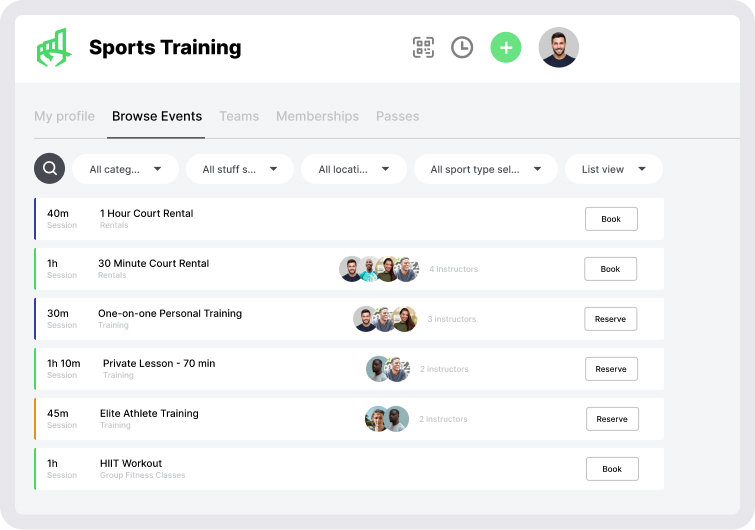
Upper Hand helps facilities connect registrations, scheduling, communication, and client management in one place. This makes it easier to keep programs organized while giving families a smoother experience from registration through participation.
Instead of managing communication and operations across disconnected systems, facilities can keep scheduling, bookings, and updates aligned throughout the season.
Parents want to understand what their athlete’s experience will look like before committing to a program.
Generic promotional content often leaves too many questions unanswered. Families want to see the environment, coaching style, athlete interaction, and overall structure of the sessions.
Visual content helps answer those questions naturally.
For example, short training clips, coach instruction moments, or walkthroughs of how sessions are structured give families a clearer understanding of what participation actually feels like.
This type of content builds familiarity and trust because it reflects real activity happening inside the facility rather than polished marketing language.
One of the biggest visibility gaps for facilities happens between active registration periods.
Programs end, schedules slow down, and communication becomes less consistent until the next major registration push begins.
The problem is that parents and athletes are still making decisions during those slower periods.
Facilities that continue sharing updates between seasons tend to stay more visible long term.
This can include:
Staying visible consistently helps facilities maintain momentum instead of restarting attention from scratch every season.
Parent feedback and athlete experiences help facilities build trust in a way promotional messaging cannot.
Families often want reassurance before registering for a new program. They want to understand how other athletes experienced the sessions and whether the environment feels organized, supportive, and well-run.
Sharing real feedback helps provide that context.
Examples can include:
The strongest testimonials usually feel natural and specific rather than overly scripted or promotional.
Many facilities struggle with marketing because everything depends on constantly creating something new.
Over time, this becomes difficult to maintain consistently alongside scheduling, staffing, and day-to-day operations.
Repeatable systems make marketing easier to manage long term.
For example, facilities can create recurring structures for:
This reduces the pressure to constantly come up with new ideas while helping communication stay more consistent throughout the year.
Most sports facilities do not grow because of one campaign or one successful social post.
Growth usually comes from staying visible consistently and making it easier for families to stay connected throughout the year.
When communication, registrations, scheduling, and content work together as part of a repeatable system, marketing becomes easier to manage and more effective over time.
If you’re managing marketing across multiple locations, things tend to get messy over time. Different teams are posting different content. Emails go out at different
Whether you’re a sports performance coach, personal trainer, mindset coach, or skills specialist, growing your business comes down to one core ability: getting clients consistently.