4. Follow Up More Than Once
Many people don’t act on the first email they receive.
This doesn’t mean they’re not interested—it often means they need more time or a reminder.
Following up helps capture that interest.
For example, a parent might open your first email but get distracted. A second email can bring them back when they have time to register. Another reminder closer to the deadline can prompt them to take action before spots fill.
Consistent follow-up increases the chances of converting interest into registrations.
5. Send Relevant Emails to the Right People
Not every program is relevant to every client.
Sending the same message to everyone can reduce engagement.
Instead, focus on sending emails that match the audience.
For example, parents of younger athletes should receive information about beginner programs, while returning clients might be more interested in advanced sessions. Someone who has previously registered for camps may respond differently than someone new.
When emails feel relevant, people are more likely to engage and sign up.
6. Keep Emails Simple and Easy to Read
Most people scan emails rather than reading every word.
If your email feels too long or difficult to follow, important details may be missed.
A simple structure helps improve engagement.
For example, short paragraphs, clear spacing, and one main message make it easier for readers to understand what you’re offering. If someone can quickly scan your email and still understand the key details, they are more likely to take action.
Simplicity makes your message easier to process.
7. Stay Consistent Over Time
Email works best when it’s used consistently.
Sending one email occasionally is less effective than building a regular pattern of communication.
For example, keeping your audience updated on new programs, sharing reminders, and staying visible throughout the season helps build familiarity. Over time, clients begin to expect your emails and are more likely to engage when they see them.
Consistency keeps your programs top of mind.
How Upper Hand Supports Email and Registrations
Managing communication alongside scheduling and registrations can become difficult as your programs grow.
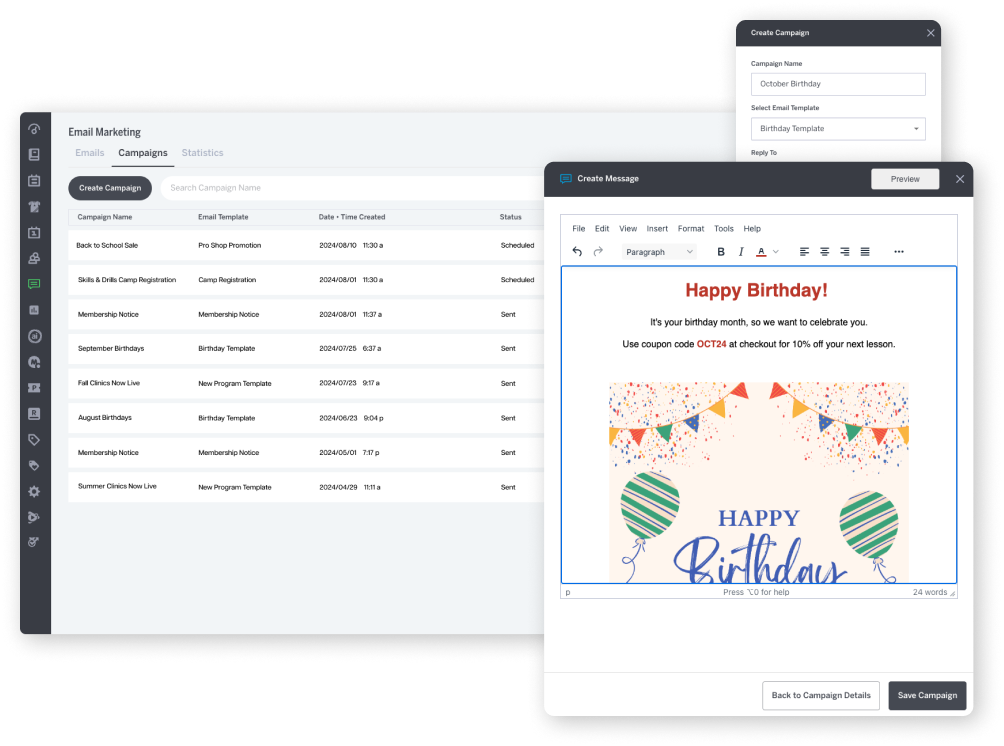
With Upper Hand marketing campaigns, facilities can create and send marketing emails without leaving the Upper Hand app.
This makes it easier to:
keep program information consistent
reach the right clients at the right time
connect emails directly to registration workflows
By keeping everything organized, facilities can focus more on driving registrations and less on managing multiple tools.