Real-time availability you can trust
One of the highest hidden costs in facility management is uncertainty.
When availability isn’t accurate, double-booking happens. Staff get scheduled in two places. Space utilization becomes inefficient.
Real-time tracking changes that.
Centralized systems allow you to:
Instantly view open and booked time slots
See which staff are assigned to which spaces
Confirm availability before booking
Prevent overlapping reservations automatically
This removes the guesswork.
When availability is reliable, conversations about “I didn’t know that was booked” disappear.
Staff and space are managed together
Facility management isn’t just about rooms or courts. It’s about how staff and space interact.
When these are managed separately, inefficiencies follow.
Centralization connects both.
You can:
Align staff availability with facility areas
Allow staff to set preferred training spaces
Ensure resource assignments reflect actual availability
Balance workload across your team
When scheduling logic connects people and space, operations stabilize.
A clearer experience for clients
Centralization doesn’t just benefit operators. It improves the client experience.
When booking flows connect directly to real-time availability:
Clients see accurate open time slots
Conflicts are prevented before checkout
Schedule changes reflect immediately
Booking becomes more transparent
The smoother your scheduling system runs internally, the more professional it feels externally.
Centralization increases revenue without adding space
Many facilities assume growth requires expansion.
Often, revenue potential already exists inside your current footprint.
When you can clearly see utilization patterns, staff availability, and space capacity, you can optimize what you already have.
Centralized visibility allows you to:
Optimization becomes possible because visibility improves.
See it in action
If your current scheduling process still depends on separate calendars, manual checks, or location-by-location oversight, there is a more streamlined way to manage it.
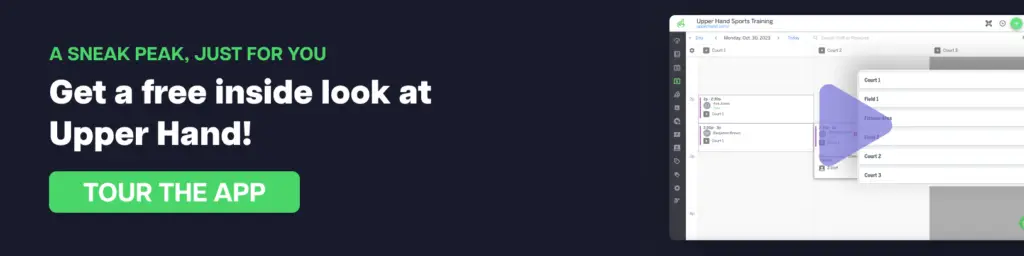
In the product tour, you’ll see how Upper Hand:
• Overlays all staff and facility resources into one view
• Provides real-time availability tracking
• Prevents double-booking automatically
• Allows drag-and-drop scheduling adjustments
• Connects staff preferences with facility areas
Centralized facility management isn’t about adding complexity. It’s about reducing friction.
Take the Facility Management Product Tour