
If you run sports camps, you’ve probably felt the pressure of filling spots without blowing money on ads. And you’re not alone. Every coach and

Running a sports facility involves managing scheduling, registrations, payments, staff, and communication across multiple programs. As facilities grow, handling these responsibilities manually or across disconnected tools can make operations more complex and time-consuming.
Upper Hand is designed to support this shift by helping facility owners manage their day-to-day operations, reduce administrative work, and maintain better visibility into their business performance.
In this article, we’ll explore what running a sports facility looks like with Upper Hand and how a centralized system supports more efficient operations.
With Upper Hand, facility owners can manage all programs from a centralized scheduling system. This includes private lessons, group sessions, teams, camps, and clinics.
Instead of coordinating schedules manually, programs can be organized with built-in structure that supports capacity limits, waitlists, and instructor assignments.
Facility owners can view:
Having this level of visibility helps reduce scheduling conflicts and ensures programs are aligned with athlete demand.
Upper Hand brings these operational components together, allowing facility owners to manage programs, track performance, and coordinate day-to-day activities from one place.
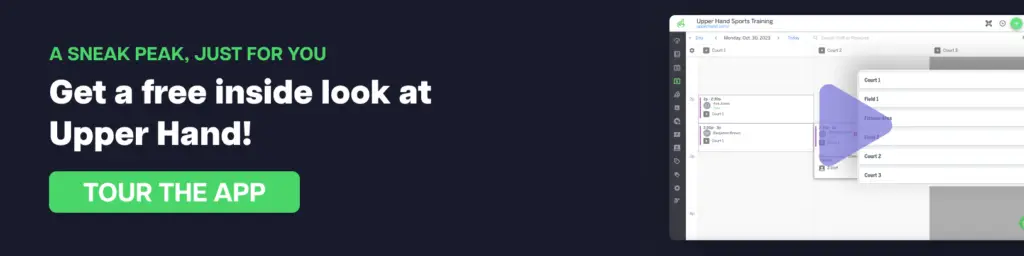
Take a live product tour to see how Upper Hand supports sports facility operations.
Upper Hand allows facilities to manage registrations and payments within the same system. This reduces the need for separate tools and helps simplify the overall process for both staff and families.
Athletes and families can register for programs and complete payments in one workflow, while facility owners maintain oversight of transactions and balances.
You can manage:
Connecting these processes helps reduce administrative follow-ups and supports more consistent revenue collection.
Upper Hand provides facility owners with access to real-time data across their programs. This allows them to monitor performance on an ongoing basis rather than waiting until the end of a season.
With consistent access to data, facility owners can identify trends and make adjustments as needed.
You can track:
This level of visibility supports more informed decision-making and helps facilities operate more efficiently.
Understanding how a centralized system supports operations is one step. Seeing how facility owners apply it in their day-to-day work provides additional context.
Facilities using Upper Hand have reported improvements in how they manage scheduling, payments, and overall operations.
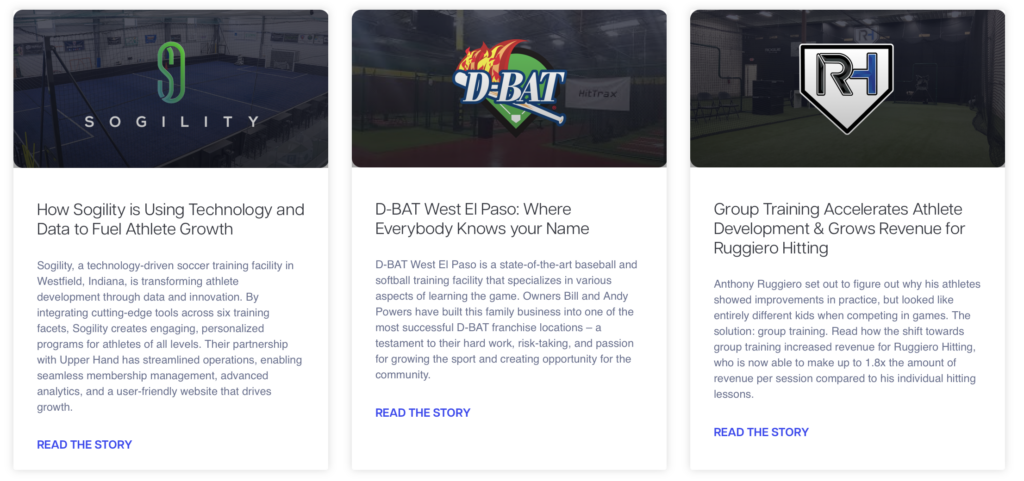
See our customer stories:
These examples reflect how a centralized system can support both operational efficiency and long-term growth.
Upper Hand includes built-in communication tools that allow facility owners to stay connected with athletes and families without relying on separate platforms.
This helps ensure that important updates, reminders, and program information are delivered consistently.
Facility owners can:
Consistent communication helps improve attendance and supports a more reliable experience for participants.
As facilities grow, coordinating staff schedules and managing facility space becomes more complex. Upper Hand provides structure that helps facility owners organize these resources more effectively.
This helps reduce scheduling conflicts and ensures programs are properly supported.
You can manage:
Keeping these elements organized supports smoother day-to-day operations.
Upper Hand allows facility owners to monitor how their space is being used, helping them identify opportunities to increase efficiency.
By reviewing utilization regularly, facilities can make adjustments to better align with demand.
You can monitor:
Improving utilization helps maximize both facility capacity and revenue potential.
A consistent and organized experience plays an important role in retaining athletes and families. Upper Hand helps facilities maintain that consistency by providing structured workflows across all areas of the business.
When programs run smoothly and communication is clear, participants are more likely to return.
Facility owners can review:
Strong retention supports sustainable growth and reduces reliance on constant new registrations.
Running a sports facility requires more than managing individual programs. It requires a system that brings scheduling, payments, communication, and reporting together in a structured and consistent way.
Upper Hand provides a centralized platform that helps facility owners manage their operations more efficiently while maintaining visibility into performance.
By using a system designed specifically for sports businesses, facilities can reduce administrative work, improve organization, and create a better overall experience for athletes and families.
If you run sports camps, you’ve probably felt the pressure of filling spots without blowing money on ads. And you’re not alone. Every coach and

Ever feel like your busy season always sneaks up on you — no matter how much you plan? You’ve got families signing up, coaches asking