
Most coaches already have enough content to post. Sessions are happening every week. Athletes are training. Progress is being made. Questions are coming in from

Parents rely on email more than most facilities realize.
Schedules change, registrations open, sessions fill up, weather impacts programming, and questions come in throughout the season. Email is often the main place families look to stay informed and decide what to do next.
The challenge is that many facilities send emails inconsistently. Some programs get promoted once and disappear. Reminders go out too late. Updates become reactive instead of structured.
Over time, this creates communication gaps that affect registrations, attendance, and the overall experience for families.
A small set of repeatable emails helps solve that problem. Instead of deciding what to send every week, facilities can build a communication system that supports registrations, keeps parents informed, and makes programs easier to manage throughout the season.
In this article, we’ll walk through five core emails every sports facility should be sending and why each one matters.
Consistent email communication helps facilities improve registrations, reduce confusion, and keep families engaged throughout the season
Different emails serve different operational purposes, from announcements and reminders to updates and retention
Reminder and follow-up emails help keep registrations moving after the initial announcement
Clear, structured emails are easier for families to read and act on quickly
Connected systems make it easier to manage communication, registrations, and scheduling together
Every program starts with awareness.
Parents need a clear understanding of what is being offered, who it is for, and how to register before they can make a decision. When announcement emails are unclear or overloaded with information, people delay taking action or skip over the message entirely.
Strong announcement emails focus on the essentials first.
This usually includes:
1. the type of program
2. age group or skill level
3. dates or timing
4. registration details
5. a clear next step
For example, if a summer camp registration opens, families should immediately understand whether the program fits their athlete and how to secure a spot. If they need to search through multiple links or paragraphs to find basic information, engagement drops quickly.
Program announcement emails also set the tone for future communication. A clear first email makes future reminders and updates easier to follow throughout the season.
Most registrations do not happen after the first email.
Parents often open a message while they are busy, plan to come back later, and forget. Others wait until they confirm schedules or talk through plans at home before registering.
Reminder emails help bring those families back into the process.
This is especially important during busy registration periods when multiple programs and activities are competing for attention. Facilities that consistently follow up tend to keep registrations moving more steadily over time.
Reminder emails work best when they are tied to a specific moment in the registration cycle.
Examples include:
1. spots beginning to fill
2. registration deadlines approaching
3. programs starting soon
4. waitlists opening
The goal is not to repeat the same message over and over. It is to keep the program visible while giving families a reason to take the next step.
Operational emails are just as important as promotional ones.
Once families register, they rely on facilities to keep communication clear and organized. Schedule changes, weather updates, location adjustments, and program notices all affect the day-to-day experience.
Without a structured process for updates, communication becomes reactive. Staff members spend more time answering repeated questions, and parents are left looking for information across multiple places.
A consistent update email helps reduce confusion and keeps expectations clear.
For example, if weather impacts field availability or a session time changes, families should receive a direct and easy-to-read update explaining:
1. what changed
2. when it takes effect
3. whether any action is needed
Clear communication improves trust and helps programs run more smoothly throughout the season.
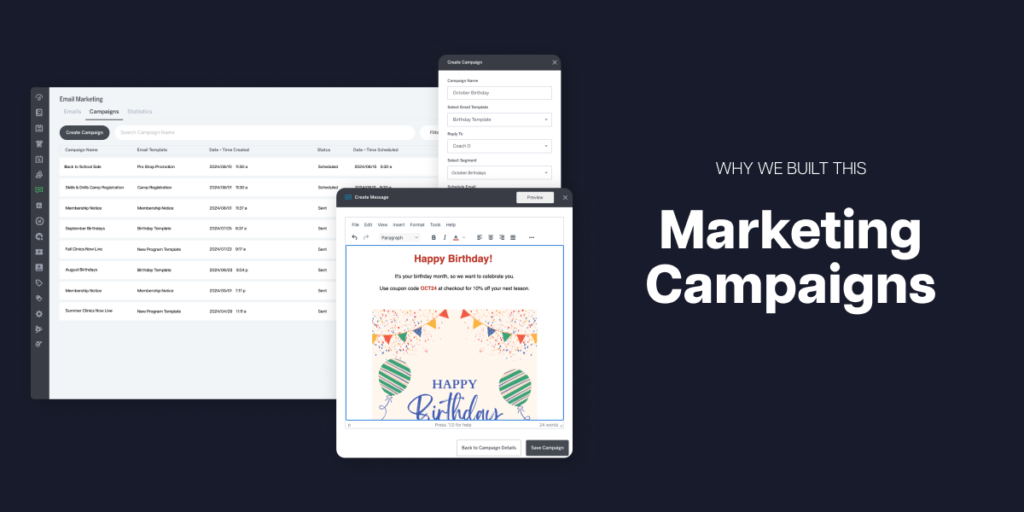
One of the easiest groups to re-engage is the families who already participated in a program.
They already know the coaches, understand the experience, and are more familiar with the registration process. Facilities that stay connected with those families tend to see stronger long-term participation.
Follow-up emails help maintain that connection after a session, camp, or season ends.
These emails can include:
1. upcoming program recommendations
2. early registration opportunities
3. seasonal announcements
4. simple thank-you messages
For example, a facility might send families information about the next available training program shortly after a session ends while the experience is still fresh.
This type of communication keeps families engaged instead of restarting the relationship from the beginning each season.
Registration deadlines create urgency, but only when families actually see them.
Many parents wait longer than expected to complete registration, especially during busy seasons. Deadline emails help bring attention back to programs before spots close or schedules finalize.
These emails work best when they are direct and easy to scan.
Parents should quickly understand:
1. when registration closes
2. whether spots are limited
3. what they need to do next
For example, a final reminder sent a few days before registration closes often captures families who intended to sign up earlier but never completed the process.
Deadline emails also help facilities plan staffing, scheduling, and capacity more accurately before programs begin.
The structure of an email affects whether people read it or move past it.
Long paragraphs, unclear formatting, and too many competing details make communication harder to process, especially on mobile devices where most families are checking updates.
The strongest facility emails are usually the easiest to scan.
That often means:
1. shorter paragraphs
2. direct subject lines
3. one primary call-to-action
4. consistent formatting across emails
When communication feels organized, families are more likely to stay engaged and respond quickly.
As programs grow, managing registrations, scheduling, and communication separately becomes harder to maintain consistently.
Upper Hand helps facilities bring those pieces together in one connected system. Program registrations, reminders, scheduling updates, and client communication stay aligned, making it easier to manage information across different programs and seasons.
This helps facilities reduce manual follow-up, improve organization, and keep communication more consistent throughout the year.
Most coaches already have enough content to post. Sessions are happening every week. Athletes are training. Progress is being made. Questions are coming in from

If you’re managing marketing across multiple locations, things tend to get messy over time. Different teams are posting different content. Emails go out at different